27 Best SEO Link Building Tools in 2026
27 Best SEO Link Building Tools in 2026 (Software to Scale & Save Money)
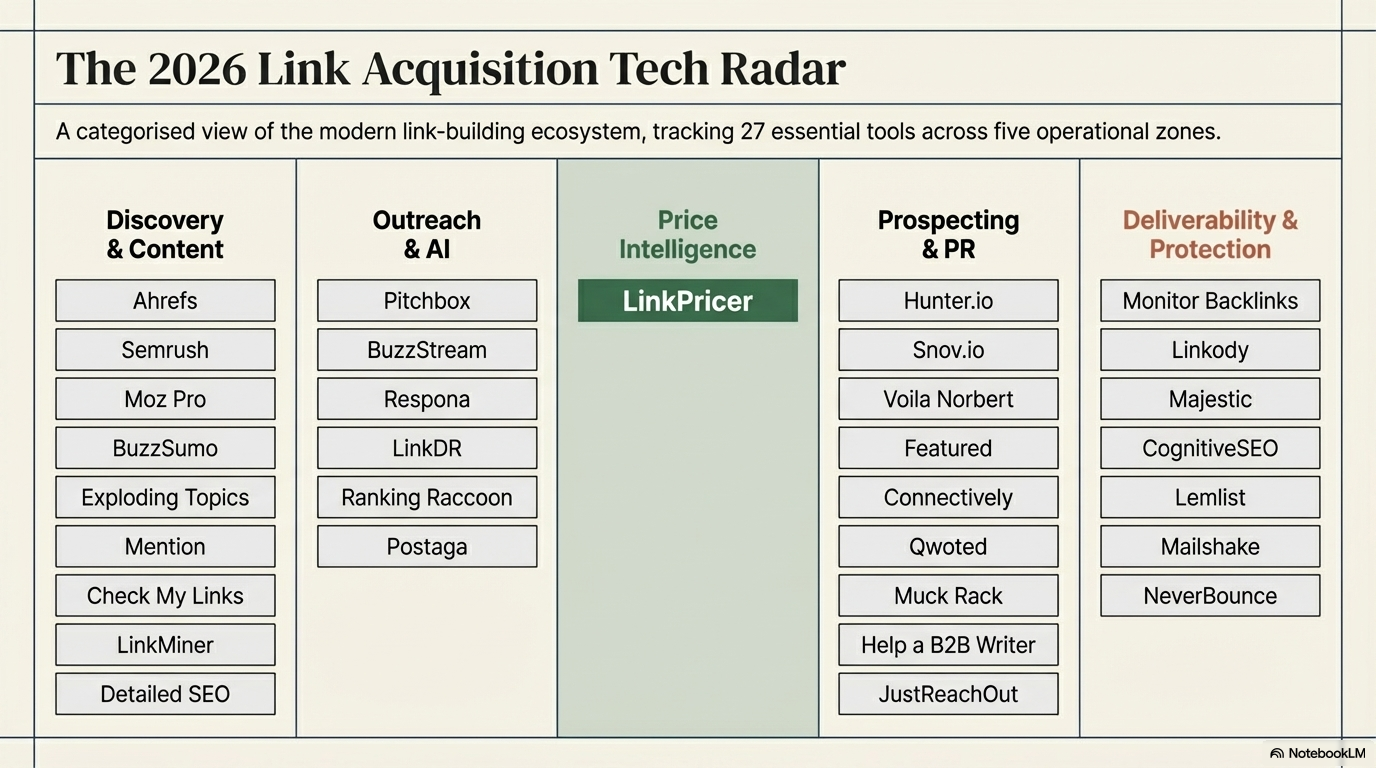
Link building in 2026 is very different from previous years. AI is reshaping the landscape and traditional approaches like sending out mass emails or purchasing from the first link marketplace you find don’t work as well. The SEO professionals getting the best results are the ones building a deliberate tech stack around three things: discovery, outreach, and, most importantly, price intelligence.
This is what’s happening in practice. Most teams are overspending because they don't have visibility into what links actually cost. They find a promising site in Ahrefs, head to a marketplace to buy a placement, and pay two or three times more than they need to, without ever realizing it. Budget leaks like these add up fast, quietly eating into the returns you're working so hard to generate.
The fix isn't one magic tool. It's a toolkit built around three pillars:
Discovery: finding the right opportunities
Outreach: building real relationships
Price Intelligence: making sure you're not overpaying
This guide breaks down the best SEO link building tools to help you grow your authority without burning through your budget. We’ve ranked by cost and long-term ROI because a tool that doesn’t continue to deliver is worth much less. Whether you're a small team or a large agency, this is a practical starting point for building a smarter stack in 2026.
Link Pricing & Budget Optimization (The "Must-Have" for 2026)
We're starting with the issue most guides skip over: price transparency.
There's a reason this section comes first. For a lot of teams, they have no problem building links but struggle to know whether they're paying a fair price for them. Most guides lead with data tools like Ahrefs, and those are valuable (we'll get to them), but they won't tell you if you're overspending on placements.
When the same backlink can cost $100 on one platform and $300 on another, that's a difference you need to be aware of and pay attention to. Understanding how pricing works across vendors is how you make sure your budget is actually working profitably for you.
LinkPricer (Best for Cost Comparison & Arbitrage)
The Problem: Pricing across link marketplaces is inconsistent, and not in a small way. The same placement can carry wildly different price tags depending on where you buy it. You need a straightforward way to compare pricing, or you’ll be making purchasing decisions without full information.
Over time, these markups absorb a significant proportion of your marketing budget. This is spend that could be more productive on content, technical improvements, or additional third-party placements. What's more, the vendors you approach are sourcing from the same publishers but pricing them differently.
The Solution: LinkPricer.com pulls pricing data from over 40 marketplaces and shows you the lowest available price for a specific domain. The simplest way to think about it: it's a Skyscanner-like price comparison engine for backlinks. You search for a domain, and it tells you where you can get the best deal on a guest post or niche edit. It cross-references domain metrics and marketplace reputation so you're making like-for-like comparisons rather than guessing.
A useful way to frame it is that you probably wouldn't book a flight without comparing prices across a few sites first. Link placements can range from $50 to $500+, so the same logic applies. LinkPricer brings that kind of price visibility to SEO purchasing.
Key Features:
Bulk Price Checking: Run an entire prospect list through the tool at once to spot savings across your pipeline.
Marketplace Cross-Referencing: Flags cases where different vendors are offering the same domain at different rates.
Domain Metric Integration: Filter by DR and traffic while comparing prices, so you're not sacrificing quality for a lower number.
Price History: Tracks pricing patterns over time so you can identify better windows to buy.
Best For: Agencies working on tight margins, in-house teams with fixed budgets, and freelancers who need every placement to count. Users typically report around 40% savings on link costs after building this into their workflow. Depending on your volume, those savings can meaningfully improve campaign profitability.
The "Big Three" All-in-One SEO Suites
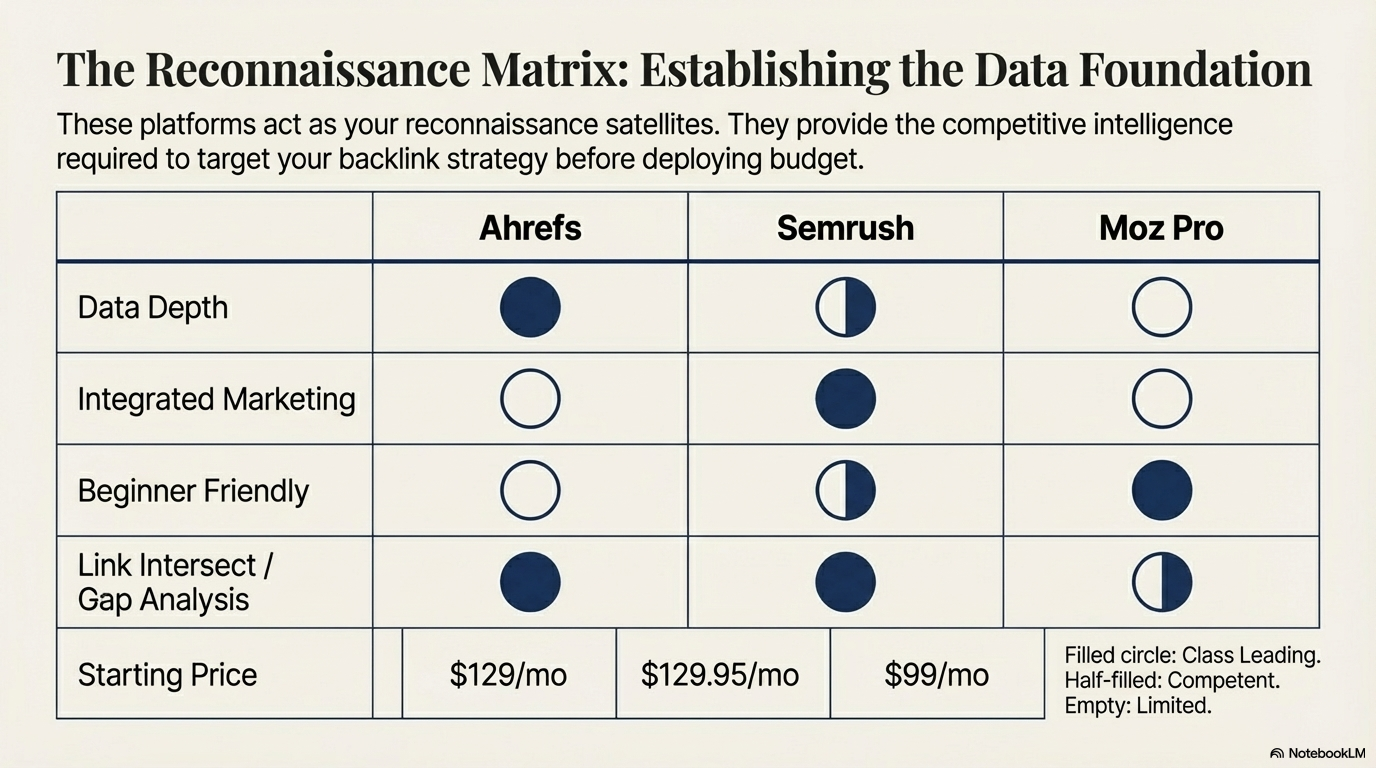
These are your "reconnaissance satellites." They are the tools that give you the data foundation for link building. They won't manage pricing or outreach for you, but they do give you valuable competitive intelligence you need to make informed decisions about where to focus your backlink strategy.
Ahrefs (Best for Data Depth)
Ahrefs maintains the largest live backlink index available with over 35 trillion links, updated every 15 to 30 minutes. In practical terms, that means you're working with the most complete picture of how sites link to each other. The Link Intersect feature shows you which sites link to your competitors but not to you, so you get a ready-made list of prospects who are already active in your niche.
Pro tip: Use Ahrefs to identify targets, then run those URLs through LinkPricer to compare placement costs. Sometimes buying a placement is more cost-effective than the hours you'd spend on manual outreach, and this combination lets you see which option actually costs less. Pricing starts at $129/month.
Semrush (Best for Integrated Marketing)
Semrush has expanded well beyond SEO into a broader marketing platform. For link building specifically, the Backlink Gap tool shows where competitors are earning links that you're not, which makes it easier to prioritize your outreach efforts The Authority Score offers a useful alternative lens to Ahrefs' DR. And in 2026, the newer Semrush One features include AI visibility tracking, which is becoming increasingly relevant.
Where Semrush stands out is integration. You can manage PPC, content, and social campaigns alongside your backlink work, all in one place. For teams that need to report on ROI across channels, that's genuinely helpful. The Backlink Audit tool is one of the more straightforward ways to identify potentially harmful links in your profile. Pricing ranges from $129.95/month to $499.95/month.
Moz Pro (Best for Beginners)
Moz Pro remains the best entry point if your team is newer to link building. Domain Authority (DA) has become the common shorthand for site value, and you'll see it in almost every vendor proposal you come across. Moz keeps things clear and accessible rather than overwhelming you with data density, which means you can focus on the fundamentals without wading through features you won't use straight away. Link Explorer covers the essentials well, like spam scores, anchor text analysis, and link discovery.
For teams starting their journey, the learning curve here is much gentler than the other giants. Pricing starts at $99/month.
Outreach & Relationship Management Platforms
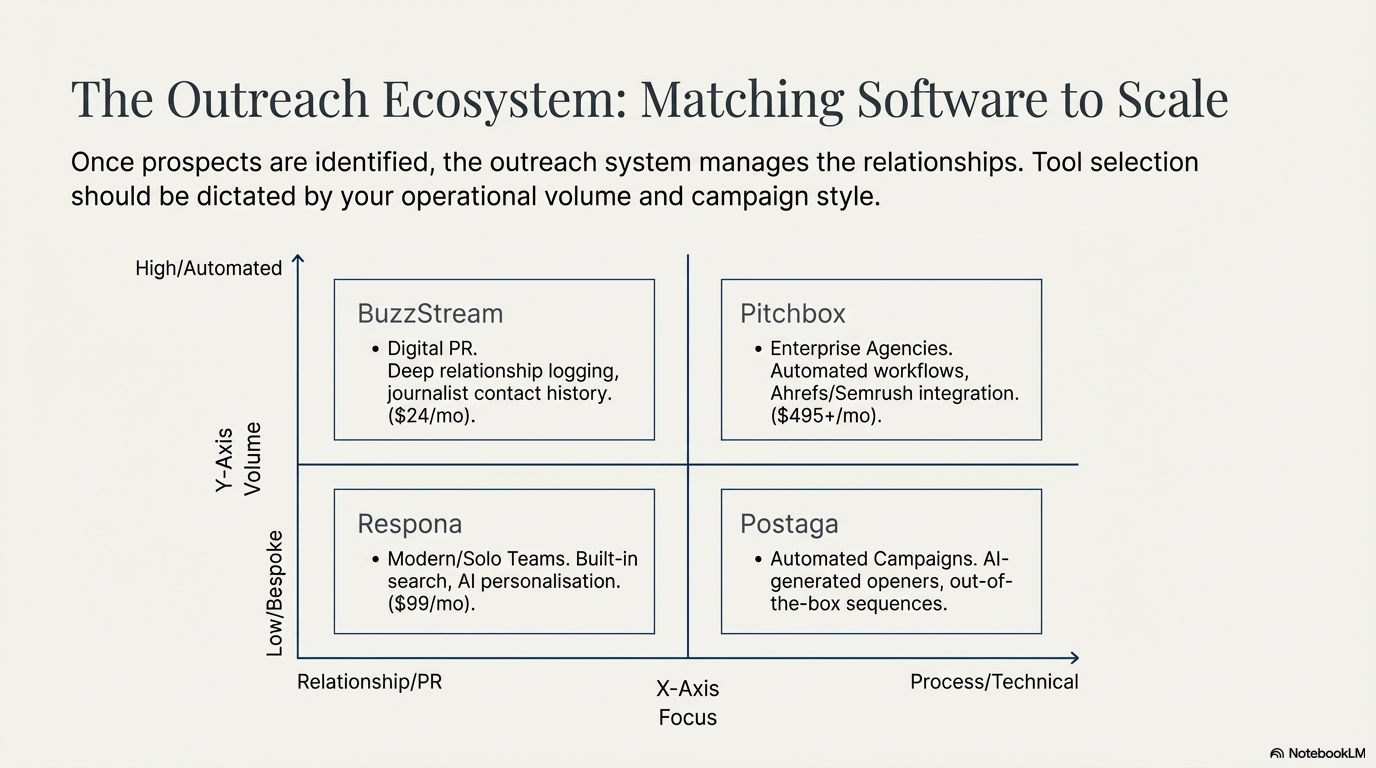
Once you've got a prospect list, you need a way to manage the outreach and conversation that follows. A good system tracks who you've contacted, what they said, and where things stand, especially if you’re doing it at volume.
Pitchbox (Best for Enterprise Agencies)
Pitchbox is built for high-volume outreach. It integrates directly with Ahrefs, Semrush, and Moz, so you can qualify prospects without switching between tools. Workflow automation handles the repetitive side of link building with features like sequenced follow-ups, send-time scheduling, and template personalization.
For agencies, the reporting is the most valuable feature. Client dashboards show real-time progress per approach, and the built-in CRM keeps team members from pitching the same site twice. It's not cheap (custom pricing, typically $495+/month), but for teams running outreach at scale, the time saved generally justifies the spend.
BuzzStream (Best for Digital PR)
BuzzStream handles relationship management well, making it well suited to digital PR which relies on ongoing contact quality to drive results. It logs every email, response, and placement, building up a contact history that you and your team can access long-term. If a journalist changes publications, BuzzStream will alert you that you've worked with them before.
It also pulls contact information automatically as you browse, and its nurture sequences offer an impressive level of control and customization. This is a good choice if your strategy relies on sustaining relationships with journalists and media outlets. Pricing starts at $24/month.
Respona (Best for Modern Outreach)
Respona includes a built-in search engine that manages discovery and outreach in the same platform. It identifies podcast opportunities and guest post prospects internally, making it a great resource for solo practitioners or small teams. Its AI personalization reviews target sites and suggests custom openers, which can boost engagement and improve response rates.
It also includes ready-made templates for proven approaches like skyscraper content and broken link building. Pricing starts at $99/month — a practical middle ground between basic email tools and full enterprise platforms.
AI-Powered Link Building Tools (New for 2026)
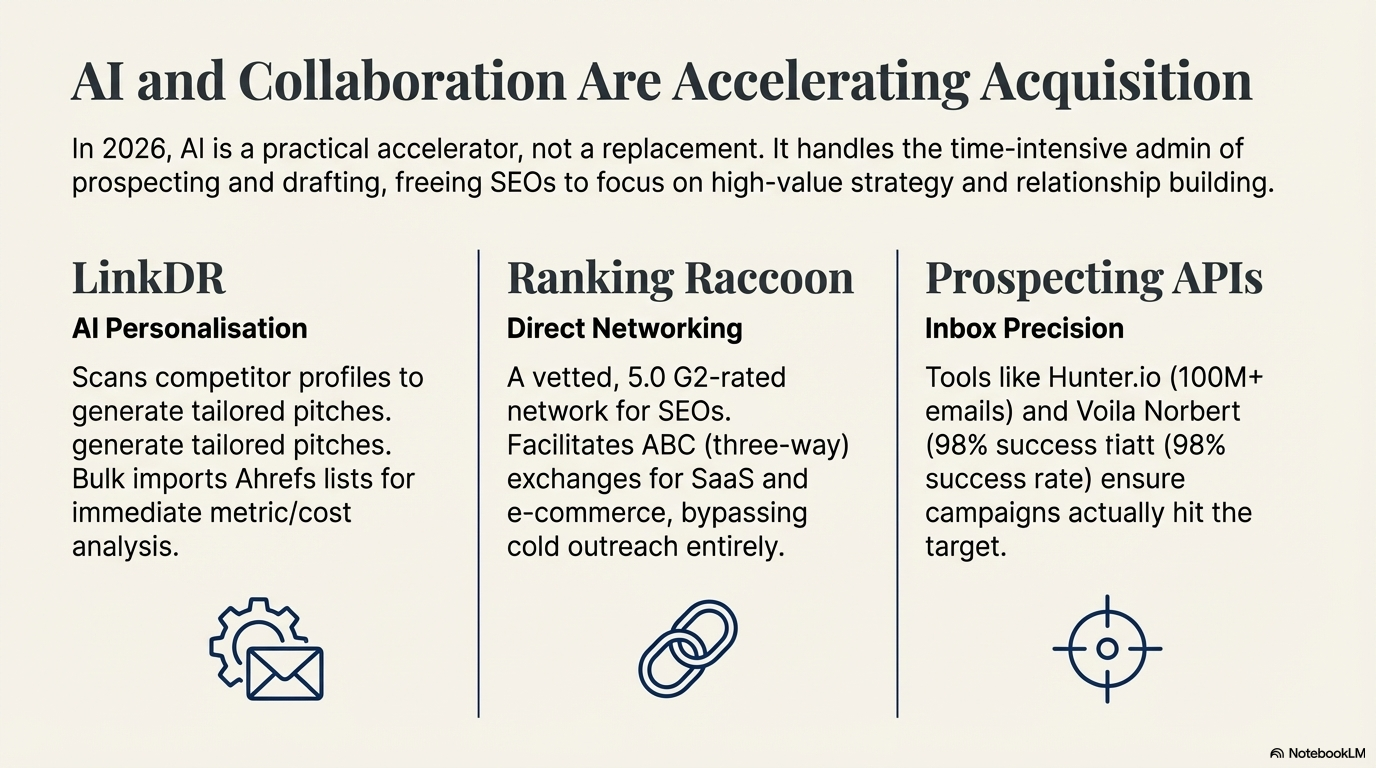
AI has become a practical part of the link building workflow, handling the time-intensive side of prospecting and personalization, so you can spend more time on strategy.
Ranking Raccoon (Best for Networking)
Ranking Raccoon takes a different approach to link acquisition. Instead of cold outreach, it provides a vetted network for SEO professionals to exchange links directly with each other. The platform filters for contributor legitimacy, which keeps the quality of the network high as is reflected in its 5.0 G2 rating.
It supports ABC (three-way) exchanges, which helps keep link profiles looking natural. For SaaS and e-commerce teams, it offers a sustainable approach that runs on collaboration rather than maintaining a high spend.
LinkDR (Best for AI Personalization)
LinkDR uses AI to handle the time-intensive aspects of prospecting while retaining a personal touch. It scans competitor link profiles and generates tailored pitches to improve chances of engagement. Users also get Slack access to the LinkDR team for strategy support, which gives it a hybrid software-and-consultancy feel.
Its bulk analysis lets you import Ahrefs lists and immediately see metrics and costs across your prospects. A good fit for teams looking to scale output without having to take on more staff.
Postaga (Best for Automated Campaigns)
Postaga offers provides end-to-end automated campaigns. Its skyscraper campaign feature finds highly linked content, helps you build an improved versions of them for your site, and automates the outreach around it. It also supports podcast booking and resource page outreach.
The AI drafting generates personalized openers based on the target's content, which saves a lot of time on the manual side. For teams that want a structured, repeatable process with minimal custom setup, Postaga delivers that straight out of the box.
Prospecting & Email Finding Tools
Every outreach campaign starts with accurate contact information. These tools help you find the right email addresses and verify them before you send out a campaign.
Hunter.io (Industry Standard)
Many SEO professionals treat Hunter.io as the benchmark for domain-based email search. Enter a website, and it returns associated email addresses, each with its own confidence score, so you can target the contacts most likely to read your email. The database covers over 100 million emails.
It's particularly good at identifying email patterns within larger organizations. Even when a specific address isn't listed, Hunter can identify the format (e.g., [email protected]) to improve your chances of reaching the right person. The built-in verification feature also helps protect your sender reputation with ISPs and ESPs.
Featured (formerly Terkel)
Featured connects subject-matter experts with a structured route to earned media and thought leadership coverage in top-tier publishers. Respond to specific editorial questions to earn high-DR placements, making sure you add value to the original content.
Connectively (formerly HARO)
The original HARO platform has evolved into Connectively, now using a credit system to improve signal quality. It remains one of the highest-volume sources for earning links from major news outlets.
Pro Tip: Set up keyword alerts and use your credits selectively on queries where you have genuine expertise. Focused responses tend to convert better and build stronger editorial relationships over time.
Voila Norbert (Best for Individual Targeting)
Where Hunter works at the domain level, Norbert specializes in finding specific people. If you have an editor's name, Norbert reports a 98% success rate in locating their email address. The Verify API is also worth using as running your list through it before importing into an outreach tool helps keep bounce rates low.
Snov.io (All-in-One Prospecting Suite)
Snov.io combines CRM, email finding, and drip campaigns in a single, budget-friendly platform. The Technology Checker identifies sites running specific tech stacks (like Shopify), which is especially useful for SaaS teams looking for integration partnership opportunities.
Digital PR & Journalist Relationship Tools
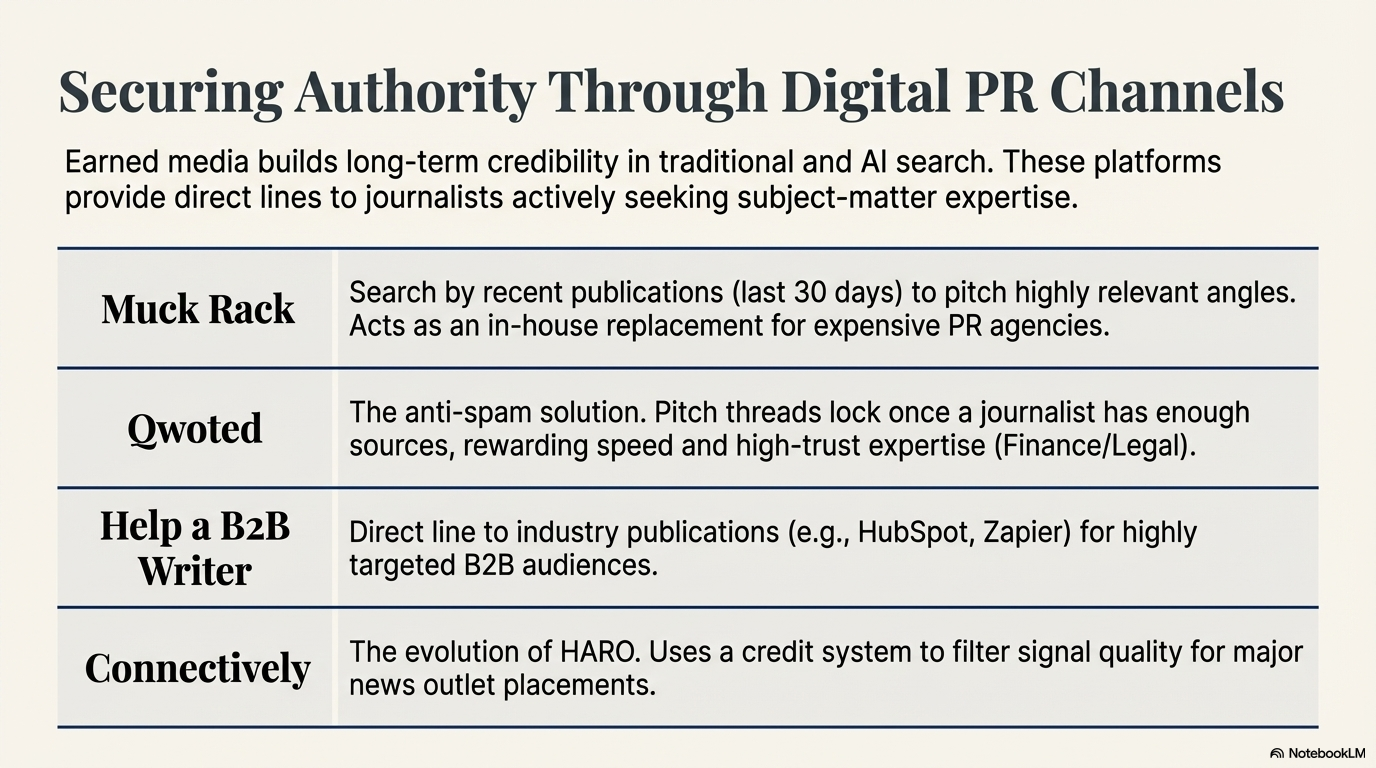
Some of the best links come through editorial coverage and journalist relationships. The following tools help you connect with writers and earn high-authority placements that build long-term credibility in traditional blue-link and AI search.
Qwoted (The Anti-Spam Solution)
Qwoted uses a closed model, locking pitch threads lock once a journalist has enough sources. The system rewards speed and quality, and keeps the platform useful for genuine experts, particularly in high-trust verticals like finance and legal.
Muck Rack (Journalist Search Engine)
Muck Rack lets you search by what a journalist has published recently, like articles written in the last 30 days. That means you're pitching based on what a reporter is covering right now, which makes your outreach far more relevant and likely to be picked up.
Cost Saver: It can replace an expensive PR agency. You get the same database agencies charge a premium to access.
Help a B2B Writer
Help a B2B Writer focuses specifically on B2B content. Link placements tend to be industry publications — think HubSpot or Zapier — rather than mainstream news outlets. For many businesses, these links are the most valuable, because they're read by the people you're actually trying to reach.
JustReachOut (DIY PR Platform)
JustReachOut pairs a journalist database with built-in guidance on how to pitch effectively.
Feature Highlight: The "Podcast Search" helps you find guest appearance opportunities, which build personal authority and generate show-note backlinks at the same time.
Backlink Monitoring & Audit Tools (Protecting Your Investment)
Building a link profile takes time, effort, and money, and these tools help you protect that investment by tracking what links are live and which have changed to improve the health of your site profile.
Monitor Backlinks (24/7 Protection)
The Problem: You pay $200 for a link. Three months later, the vendor removes it or switches it to NoFollow.
The Solution: If a vendor removes a placement or switches it to nofollow three months after you've paid for it, you'll know about it quickly and have the evidence to follow up.
Money Saver: Users regularly recover significant spend by catching these changes early.
Linkody (Budget-Friendly Monitoring)
Linkody offers monitoring at a lower price point, tracking new and lost links, and index status. Its white-label PDF reports save a lot of time if you're having to report performance to clients regularly.
Majestic (Trust Flow Authority)
Majestic's "Trust Flow" measures the quality of a site's linking neighborhood, and it's generally harder to manipulate than DR alone. That makes it a useful additional layer of detail when evaluating whether a backlink is worth pursuing.
Pro Tip: Vet expensive LinkPricer finds with Majestic. If a site has high DR but low Trust Flow, it is likely a link farm.
CognitiveSEO (Toxic Link Detection)
CognitiveSEO identifies unnatural link patterns in your profile and alerts you to potential risks before they start affecting your rankings. For larger sites with complex link profiles, that kind of automated risk classification can save a lot of manual audit time.
Specialized Chrome Extensions (Speed Tools)
These live in your browser and speed up tasks you'd otherwise need a full dashboard for.
Check My Links (Broken Link Building)
This extension scans any page and highlights broken (404) links in red. Open a resource page, run the scan, and you get a list of broken link building opportunities straight away without the manual effort.
LinkMiner (Quick Metrics)
LinkMiner gives you a lightweight way to check link strength and placement type (sidebar vs. in-content) directly in the browser. It’s useful for quickly qualifying prospects without the cost or implementation requirements of switching to a full SEO suite.
Detailed SEO Extension (Site Quality Check)
This extension finds title tags, schema markup, and other technical details straight away, providing you with a quick way to assess site quality before you invest time in outreach. Signs of a poor technical setup (duplicate meta descriptions, missing schema) are an early indicator for many SEO professionals that a site isn't worth pursuing.
Outreach Deliverability & "Warm-Up" Tools
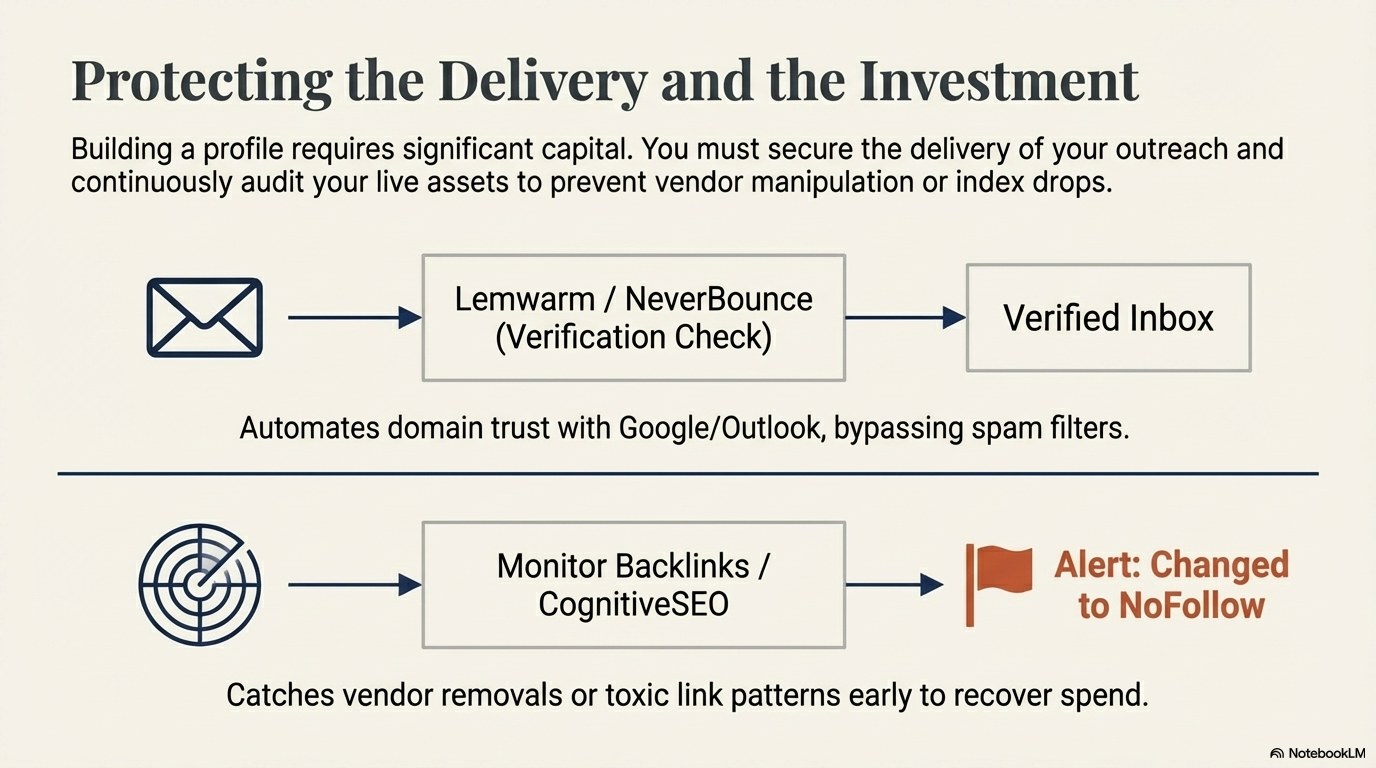
Strong outreach depends on your emails actually reaching the website owner’s or brand’s inbox. These tools help you build and maintain email sender reputation, so your campaigns are more likely to land in decision-makers’ inboxes.
Lemlist (Lemwarm Deliverability)
Lemlist uses Lemwarm, which automates the domain warm-up process by sending and receiving emails within a trusted network, so you build legitimacy with Google and Outlook. It also offers features like dynamic image personalization which can help improve reply rates.
Mailshake (Omnichannel Outreach)
Mailshake combines email outreach with phone and LinkedIn touchpoints. If an email goes unanswered, it prompts you to follow up on LinkedIn, giving you multiple ways to reach the same contact. That multi-channel approach can improve overall contact rates significantly.
NeverBounce (List Verification)
NeverBounce checks your email list before you upload it to a broadcasting platform. It filters out invalid addresses, catch-alls, and spam traps, providing you with a straightforward way to protect your domain reputation at low cost.
Content & Asset Discovery Tools
The links you gain naturally and organically come from creating content that others want to reference. Use the tools below to find out what topics are performing well and where the opportunities are.
BuzzSumo (Content Performance Analysis)
BuzzSumo shows you which content is actually earning links in your sector. Search a topic and see the most-linked articles to see what’s gaining traction so you can improve on it. This is the foundation of the proven SEO technique, the skyscraper approach. Find what's performing, create something stronger, and reach out to the sites already linking to the original.
Exploding Topics (Trend Anticipation)
Exploding Topics’ key selling point is the value of timing as it identifies rising keywords and topics early, before they become competitive.
The Strategy: Publish an authoritative piece on a trending subject before it hits the mainstream to position your site as the go-to reference as interest grows.
Mention (Unlinked Brand Monitoring)
Mention tracks where your brand is being discussed online and alerts you to instances of references to your company where there is no link. Send a short message to each site, thanking them for the mention and asking if they'd consider adding the link tends to get a good response.
Strategic Workflows: How to Combine These Tools
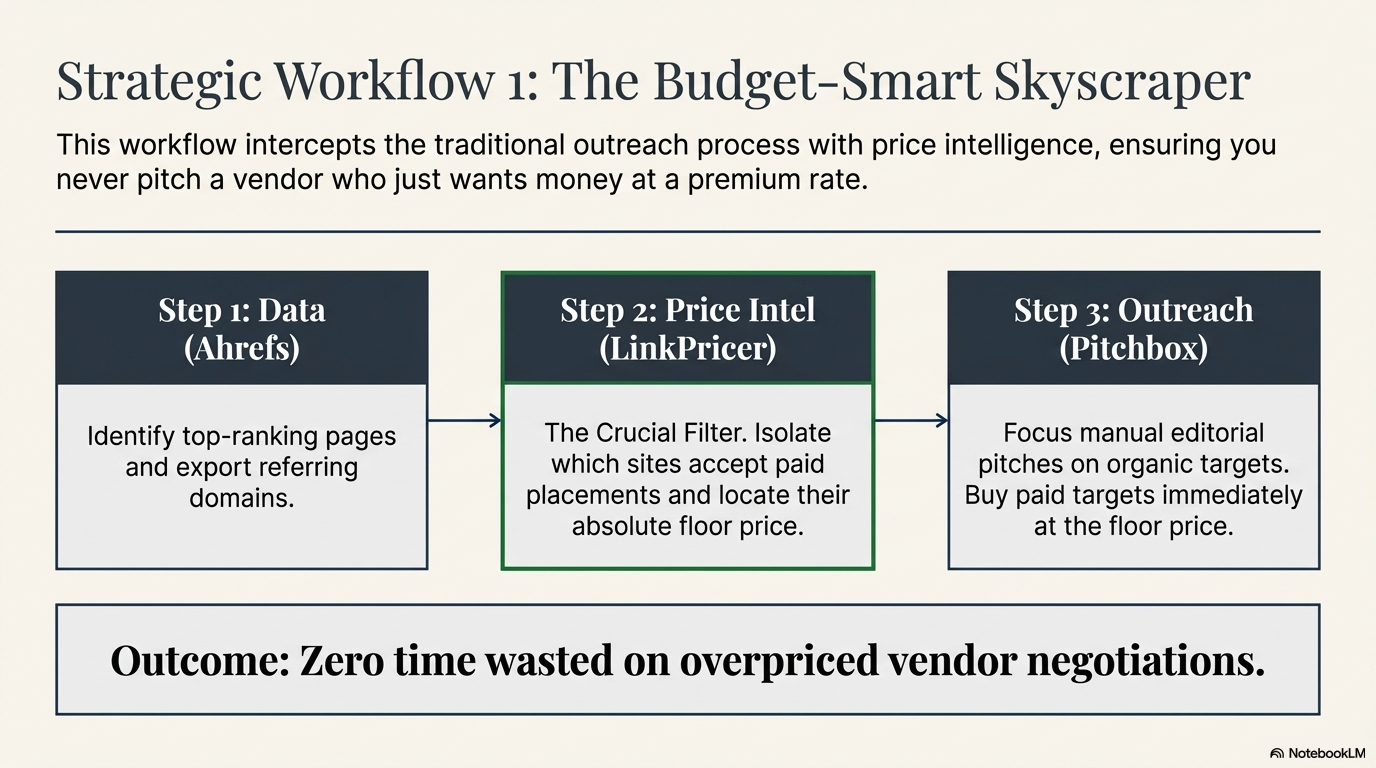
Individual tools are useful. Combining them into a repeatable workflow is where the real efficiency gains come from.
Strategy 1: The "Budget-Smart" Skyscraper
Ahrefs: Identify a top-ranking page in your niche with a strong backlink profile.
Create: Produce a better version of that content.
Export: Pull the list of referring domains from Ahrefs.
LinkPricer: Crucial Step: Run that list through LinkPricer to see which sites accept paid placements and what they charge across different marketplaces.
Pitchbox: Focus your manual outreach on the sites that respond to editorial pitches. For the sites that accept paid placements, you'll already know the best available price.
Result: You stop wasting time pitching to vendors who just want money, and you buy at the floor price.
Strategy 2: Competitor Replication with Cost Intelligence
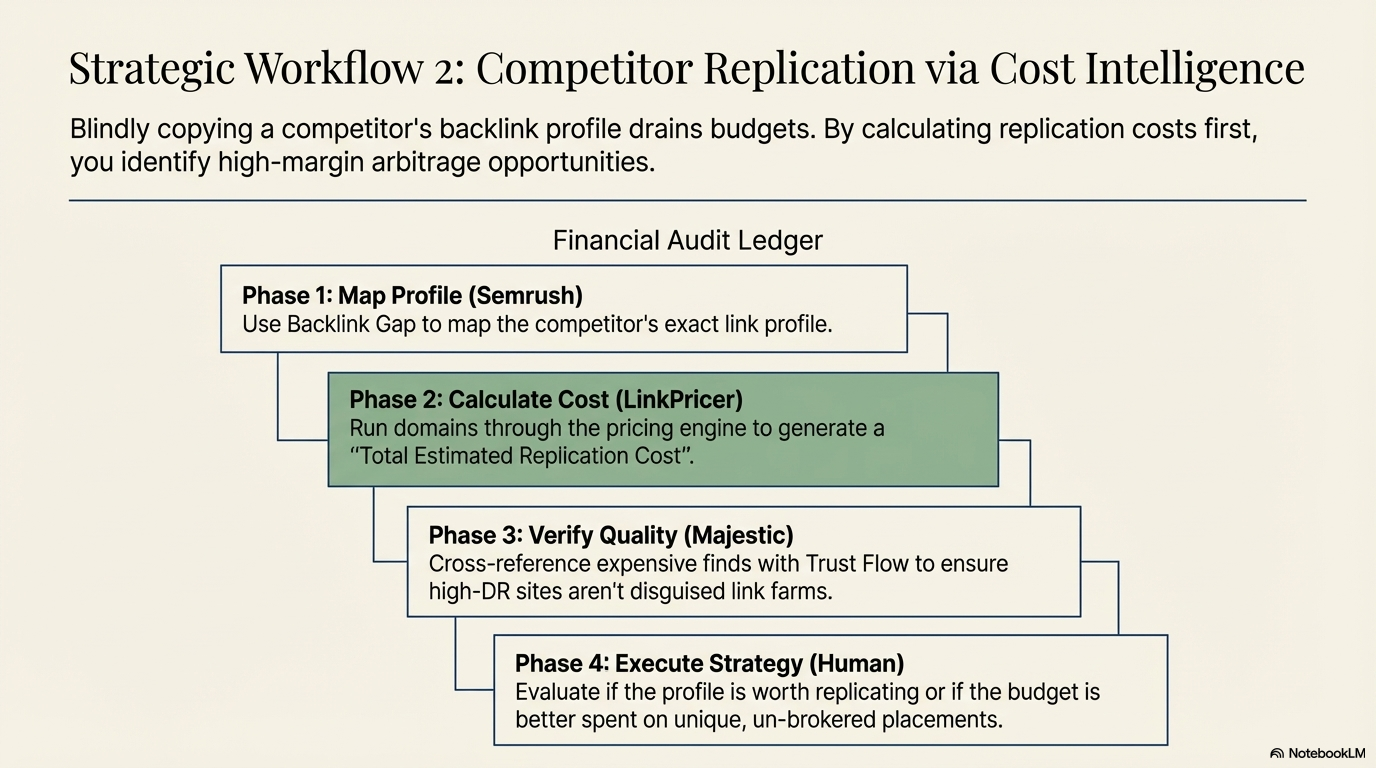
Semrush: Use the Backlink Gap tool to identify links your competitors have that you don't.
LinkPricer: Run those domains through LinkPricer to estimate what it would cost to replicate their profile.
Analyze: Evaluate whether their strategy is worth replicating at that price and look for opportunities where marketplace pricing varies significantly.
Link Building Services vs. Tools
Services like OutreachZ or Editorial.Link are convenient, but they mark up prices by 100-200%. By using LinkPricer, you can negotiate or decide to do it in-house.
Building Your 2026 Stack
You don't need all of these tools. The right combination depends on your role, your budget, and the volume of link building you're doing. Here are three practical starting points.
Role | Recommended Stack |
|---|---|
The Bootstrapper | LinkPricer + Connectively (Free) + Hunter.io + Gmail |
The Agency | Ahrefs + LinkPricer + Pitchbox + Monitor Backlinks |
The Digital PR Pro | Semrush + Qwoted + Muck Rack |
Conclusion: The 2026 Link Building Imperative
The best stack for 2026 relies on three pillars: Data (Ahrefs/Semrush), Outreach (Pitchbox/BuzzStream), and Cost Intelligence (LinkPricer).
That third area is where most teams have the most room to improve. Organizations using price comparison tools typically report 30–40% lower acquisition costs. Over the course of a year, those savings add up significantly.
The tools that handle research, personalisation, and admin are better than ever. That frees you up to focus on the parts that actually move the needle: building relationships, creating strong content, and making informed decisions about where your budget goes.
Your Next Step: Don't start your next campaign blind. Check the real market price of your target backlinks on LinkPricer.com before you send a single email. Those few minutes can save you thousands—money better spent on growth.
Frequently Asked Questions
What are the best SEO link building tools for beginners in 2026?
Start with Moz Pro for its ease of use, LinkPricer to ensure you aren't overpaying, and Hunter.io to find emails. This trio covers the basics without overwhelming you.
How much should I budget for link building tools?
Bootstrappers can survive on $100-$200/month. Agencies usually look at $500-$1,500/month. Enterprise stacks run $2,000+.
Why is price comparison important for link building?
Because of arbitrage. The same link can cost $100 or $300 depending on where you look. Price comparison tools help you spot these gaps and reduce overspend.
How do AI tools compare to traditional approaches?
AI is an accelerator, not a replacement. It speeds up prospecting and drafting, but human oversight is required for relationship building. Tools like LinkDR and Postaga are perfect hybrids.
Should I use services or do it in-house?
Services mark up prices by up to 200%. If you have the capacity, doing it in-house with a price comparison tool to check costs offers significantly better ROI.